
Digital Payments in China: Setting Up Alipay & WeChat Pay
Published on November 24, 2026
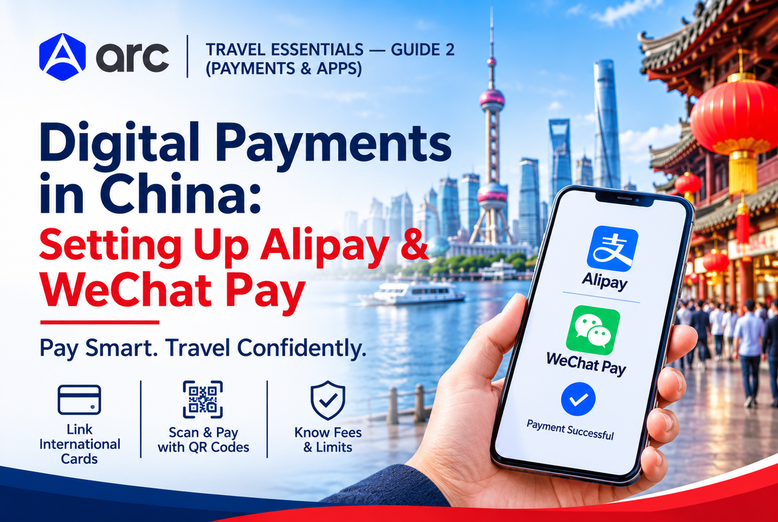
Mainland China is almost entirely cashless. From metro gates and coffee shops to Didi rides and wholesale market stalls in Shenzhen, Guangzhou, and Yiwu, nearly every transaction runs on QR codes through Alipay and WeChat Pay.
The good news: you no longer need a Chinese bank account. Both apps allow international visitors to link foreign Visa and Mastercard cards. Here's how to set them up before you fly—and avoid the fees and limits that catch first-time visitors off guard.
How to Set Up and Use Digital Payments in China
1. Set Up Both Apps BEFORE You Fly
Do not wait until you land. Linking an international card often requires SMS OTPs or 3D-Secure verification, which can fail on roaming. Install and verify both apps—some vendors prefer one over the other.
| Setup Step | Alipay (Recommended Primary) | WeChat Pay (Essential Backup) |
| 1. Register Account | Download Alipay (international version) and register with your home mobile number. | Download WeChat and register with your home mobile number (you will also use this to chat with factories). |
| 2. Passport Verification | Go to Me → Settings → Account & Security → Identity Information. Scan passport and complete face check. | Go to Me → Services → Wallet → Identity Info. Scan passport and ensure name matches your credit card. |
| 3. Link Foreign Cards | Me → Bank Cards → Add Card. Supports Visa, Mastercard, JCB, Diners Club, Discover. | Me → Services → Wallet → Bank Cards → Add a Card. Same card support. |
| 4. Test & Set PIN | Set 6-digit payment password. Add two cards if possible as backup. | Set 6-digit payment PIN. Enable international transactions in your home banking app. |
2. Fees & Transaction Limits (The RMB 200 Rule)
| Transaction Tier | Alipay / WeChat Platform Fee | Practical Tip |
| Single Payment ≤ RMB 200 (~$28) | 0% Platform Fee (Free) | Covers most daily meals, metro, Didi, and coffee with no extra platform fee. |
| Single Payment > RMB 200 | 3% Platform Fee | Applies to larger restaurant bills, hotel deposits, or retail purchases. |
| First-Time Card Promo (WeChat) | Often 90-day fee waiver (check in app) | Look for new-user promotions when linking your first overseas card. |
| Verified Account Limits | Up to ~USD 5,000 per transaction / USD 50,000 per year | Requires passport verification. Actual limit also depends on your home bank. |
Pro Tip: Avoid Hidden Foreign Currency Markups
Use a Zero-Forex Card: Even when Alipay or WeChat Pay charges 0% (under RMB 200), many Indian or international cards still add a 3–3.5% foreign currency markup. Link a zero-forex travel card and always choose to be billed in RMB (¥).
3. How QR Code Payments Work on the Ground
- Method A — You Scan the Merchant: Used at small shops, restaurants, and market stalls. Open Scan, point at their QR code, enter the amount, and confirm with your PIN.
- Method B — Merchant Scans You: Used at convenience stores, supermarkets, and hotels. Open your Payment QR code and let them scan it.
- Metro & Public Transit: In Alipay, go to Transport, select your city, and activate the digital metro QR code.
4. What International Cards CANNOT Do (Important for Buyers)
Alipay and WeChat Pay work well for daily expenses, but there are clear limits for business purchases:
- No Personal Transfers (转账): You cannot send personal transfers or pay individual personal QR codes with a foreign card.
- Not Built for Bulk Orders: Large payments (factory deposits, wholesale orders) often trigger high fees, bank blocks, and lack proper commercial invoicing.
- Use a Proper B2B Payment Channel: For supplier payments, use a dedicated B2B solution instead of personal travel apps.
B2B Solution: Pay Chinese Suppliers in RMB (¥) or USD ($) Under One Invoice
ARC Limited Payment Services: For factory deposits, wholesale market purchases, and RMB-only suppliers, ARC Limited's payment services let you settle one consolidated invoice while our Hong Kong and Shenzhen teams disburse local RMB or USD directly to your suppliers—with zero frozen accounts or personal-QR roadblocks.
5. Backup Cash & Troubleshooting
- Carry Backup Cash: Keep RMB 500–1,000 in small notes (10, 20, 50) as backup.
- Notify Your Home Bank: Enable international online and POS transactions in your banking app before travel.
- If a Payment Fails: Check your internet connection, try your backup linked card, or confirm the vendor is showing a merchant QR (not a personal QR).
Need to Pay Chinese Suppliers Safely?
Use Alipay and WeChat Pay for daily expenses. For factory deposits, wholesale purchases, or multiple suppliers, ARC Limited handles local RMB and USD payments under one consolidated invoice.