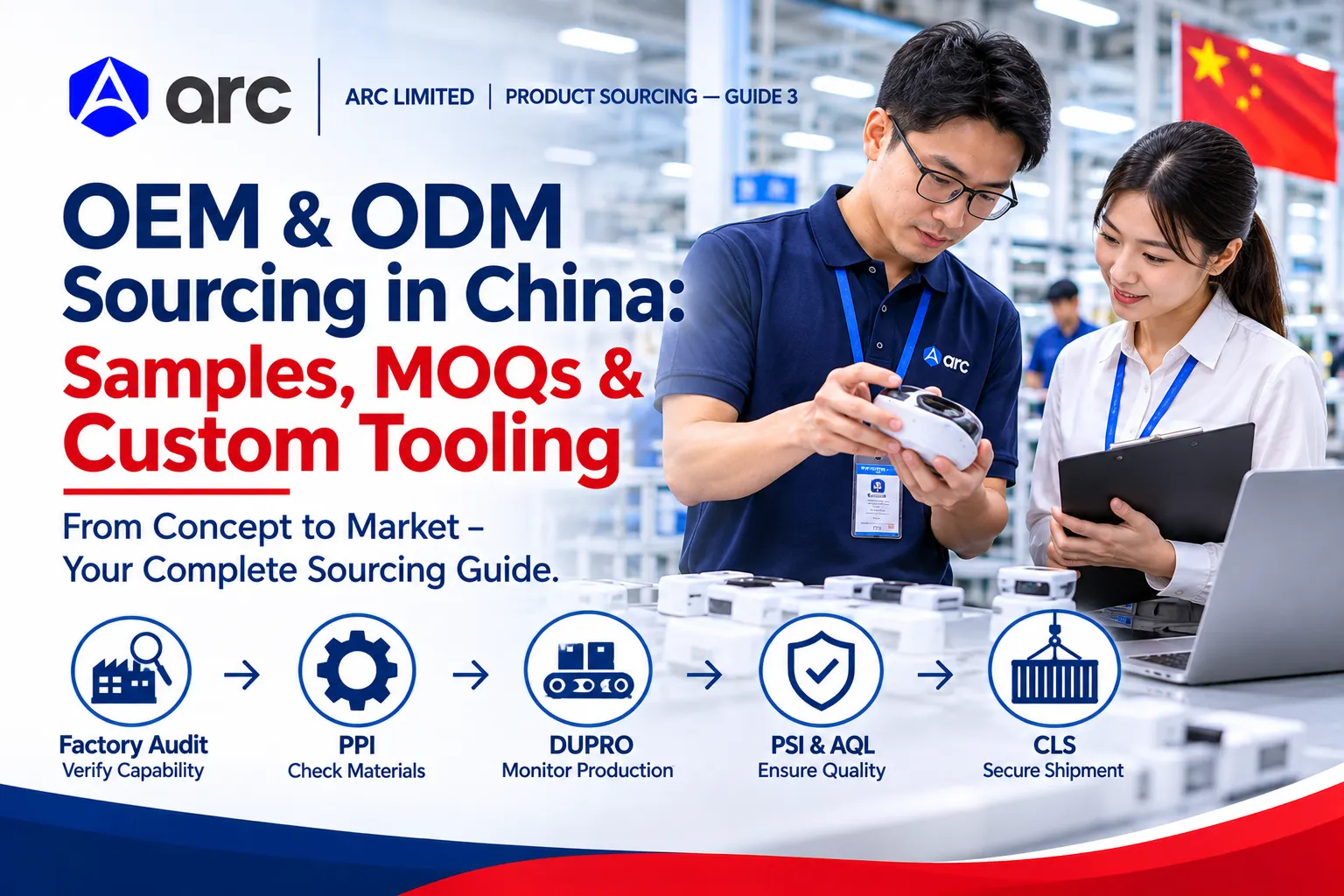
The 4-Stage China QC Playbook: When to Book PPI, DUPRO, PSI & CLS
Published on November 26, 2026
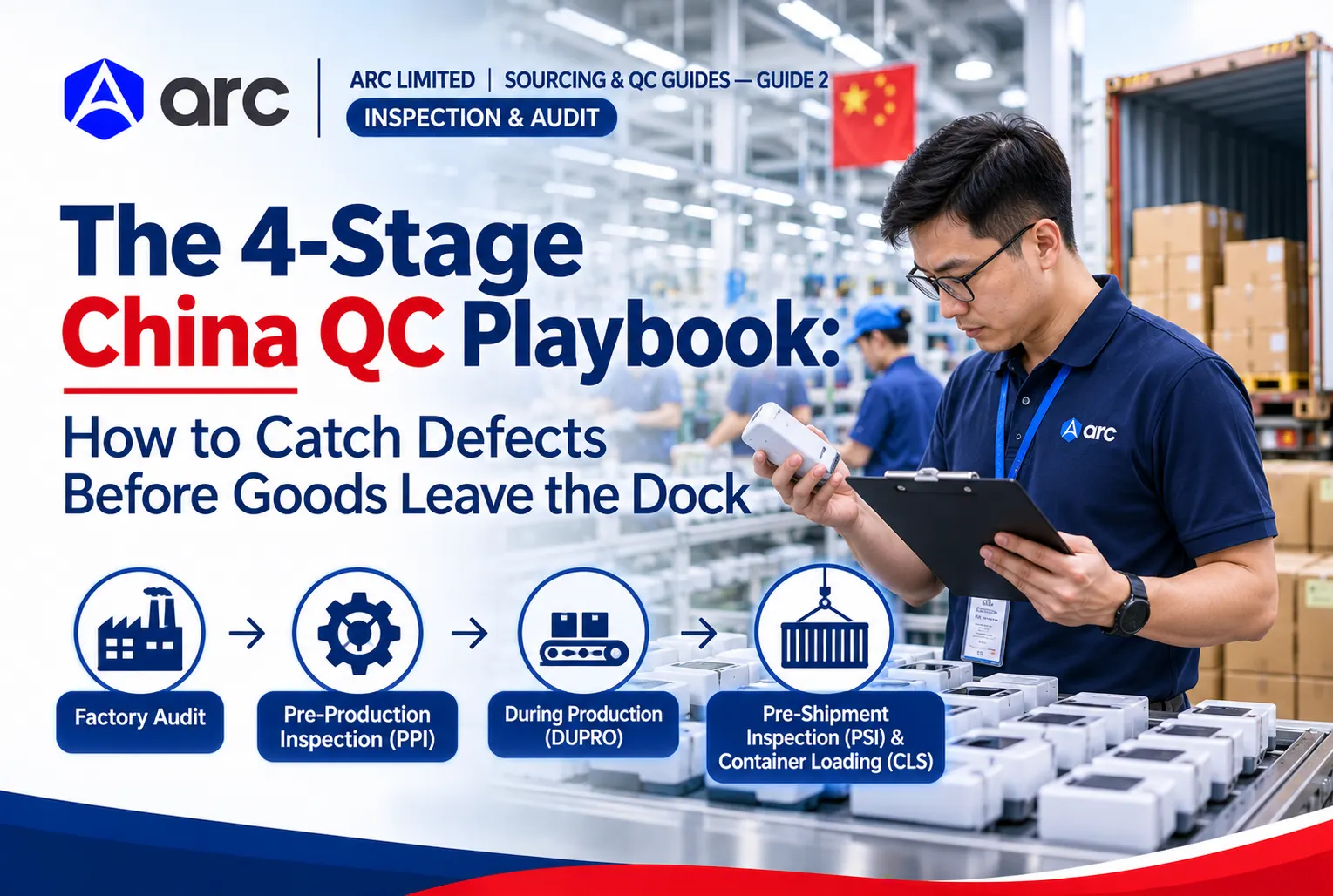
The 4-Stage China QC Playbook: How to Catch Defects Before Goods Leave the Dock
Most importers only discover quality problems after the container is sealed and the final balance is paid. At that point your leverage is gone. Returning defective stock across borders is expensive, slow, and often impossible.
Quality control in China is not a single final check. It is a structured, four-stage process designed to catch material substitutions, production drift, and packaging mistakes while they are still easy and cheap to fix.
Before Production Starts: Factory & Vendor Capability Audits
Before you issue a purchase order or wire a deposit, you need to know whether the supplier can actually manufacture your product. A Factory & Vendor Capability Audit evaluates the supplier's legal business licenses, operational setup, machinery, and actual production capacity on the ground.
This step immediately separates genuine manufacturers from trading companies posing as factories and prevents you from placing a high-volume order with an under-equipped workshop.
Common failure: Trading company presenting itself as a factory, or a workshop with insufficient capacity/equipment for your order volume.
What to specify: Verify business license, factory address, machinery list, and recent production capacity. Request photos of production lines and finished goods from similar orders.
Stage 1: Pre-Production Inspection (PPI)
When to book: After your deposit is paid, just before mass production begins.
A Pre-Production Inspection verifies that the factory has sourced the exact raw materials and key components specified in your purchase order. Many quality failures start here—such as a supplier substituting a thinner-gauge metal, a lower-grade plastic resin, or an off-spec electronic component to protect their margin.
What our inspectors check:
- Raw material quality, grades, and batch consistency against your golden sample.
- Key sub-components and accessories on the factory floor.
- Factory readiness, tooling setup, and production line preparation.
Common failure: Factory has already purchased cheaper or off-spec materials that do not match your golden sample.
What to specify: Cross-check material certificates and physical samples (thickness, weight, hardness, color, composition) against the approved golden sample before production starts.
Stage 2: During Production (DUPRO) Checks
When to book: When the first completed batch comes off the line (typically 20%–30% of the order).
Waiting until 100% of your order is finished to discover a recurring defect—like misaligned printing, weak soldering, or wrong assembly tolerances—means the entire batch has to be scrapped or reworked, blowing up your lead time. A DUPRO check inspects the first completed units while production is actively running.
What our inspectors check:
- Visual, functional, and dimensional accuracy of the first finished batch.
- Assembly line workflow and internal factory QC processes.
- Corrective actions on any early defects before the remaining 70%–80% of the order is produced.
Common failure: First units look acceptable, then the line drifts (inconsistent assembly, fading print, wrong torque settings).
What to specify: Inspect first completed batch (20-30%). Agree on a defect threshold that triggers a production pause until corrective action is verified.
Stage 3: Pre-Shipment Inspection (PSI) & AQL Sampling
When to book: When 100% of the goods are finished and at least 80% are packed for export.
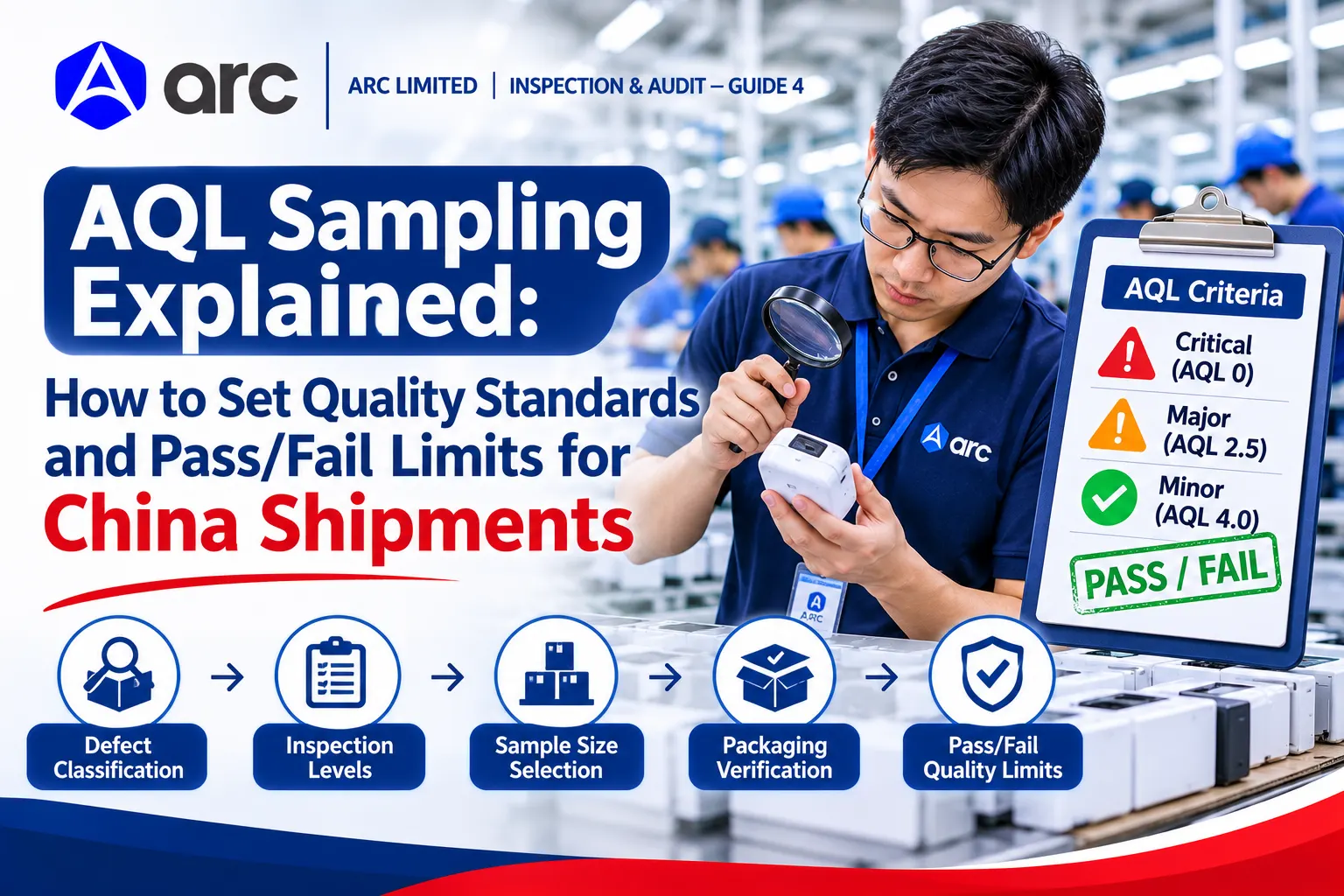
This is the most critical checkpoint before you release your final balance payment. Because inspecting every single unit in a large order is impractical, professional inspectors use AQL (Acceptable Quality Limit) statistical sampling to pull a random, representative sample across all packed cartons.
AQL is a statistical sampling plan based on ISO 2859. You are not inspecting 100% of the order. You pull a random sample and accept or reject the whole lot based on how many defects appear in that sample.
How AQL Defects Are Classified
- Critical Defects (AQL 0): Safety hazards, regulatory violations, or anything that could injure a user or fail customs. Even one defect fails the inspection. Do not ship.
- Major Defects (Typically AQL 2.5): Functional failures or obvious visual flaws that make a product unsellable. Usually results in a fail.
- Minor Defects (Typically AQL 4.0): Slight cosmetic imperfections that do not affect usability. Often pass if within the limit.
Quantity & Packaging Verification
Alongside product testing, a complete PSI includes Quantity & Packaging Verification:
- Auditing total carton counts against your packing list.
- Checking export carton durability (drop tests and moisture protection).
- Verifying barcodes, inner labels, and outer shipping marks to prevent customs delays and transit damage.
Common failure: Wrong quantity, missing barcodes/shipping marks, weak packaging, or defect rates exceeding the agreed AQL.
What to specify: Confirm 100% finished and ≥80% packed. Specify AQL levels, packing list, and required tests (function, drop, barcode scan).
Stage 4: Container Loading Supervision (CLS)
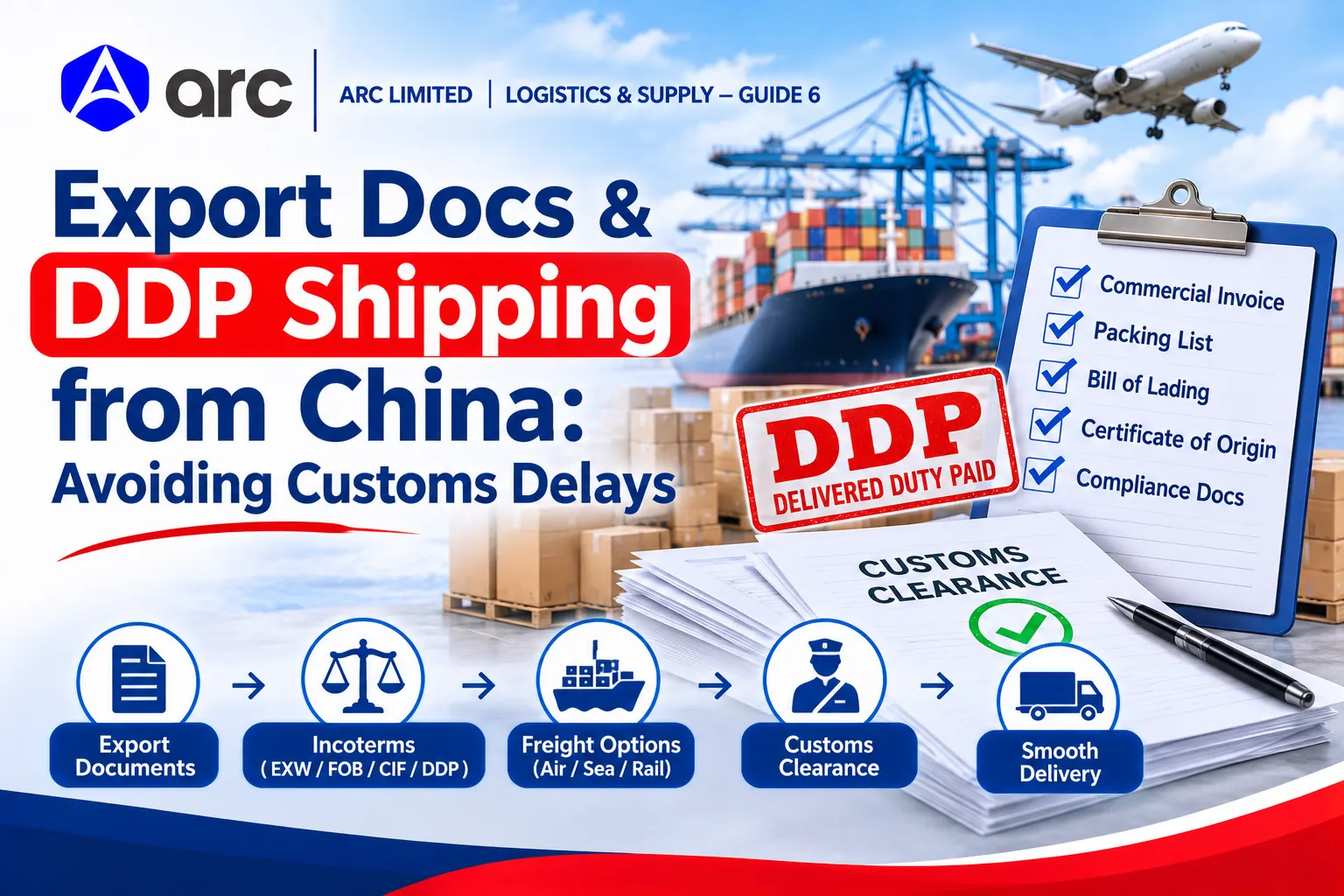
When to book: On the day your cargo is loaded into the shipping container at the factory or consolidation warehouse.
Even if your goods pass PSI, damage or mix-ups frequently happen during loading—such as wet containers, crushed bottom cartons, or missing boxes. Container Loading Supervision puts an inspector on-site at the dock from the first carton to the final seal.
What our inspectors check:
- Container interior condition (checking for holes, moisture, odors, and floor damage).
- Proper stacking and handling to prevent crushing during ocean transit.
- Final carton count verification as goods enter the container.
- Recording the container number and official customs seal number on-site.
Common failure: Damaged or wet container, crushed cartons at the bottom, or short-shipped quantities that only appear after loading.
What to specify: Inspector must be present for the entire loading. Photograph container condition, stacking method, final count, and seal number.
Quick Reference: Which QC Stages Do You Need?
| QC Stage | Best Timing | Ideal For | Primary Risk Eliminated | Relative Priority |
| Factory Audit | Before paying deposit | New suppliers, high-value orders | Fake factories, poor capacity | High (new suppliers) |
| PPI | Before mass production | Custom OEM/ODM, strict material specs | Substandard raw materials | Medium–High |
| DUPRO | First batch off the line | Tight deadlines, complex assembly | Mass-producing a systematic defect | Medium |
| PSI (AQL) | 100% finished, 80% packed | Every single shipment | Paying for defective or miscounted goods | Essential |
| CLS | At container loading dock | Full container loads (FCL), fragile goods | Transit damage, short-shipped cartons | High (FCL / fragile) |
In the last 12 months, ARC inspectors have caught material substitutions or packing shortfalls on a significant percentage of first-time supplier orders before the final payment was released—protecting clients from costly disputes and returns.
Protect Your Next Shipment Before It Leaves China
You don't need to fly to China to control your supply chain. ARC's certified local inspectors deploy across China's manufacturing hubs to deliver photo-backed, same-day inspection reports—giving you full visibility before you release final payment.