Export Docs & DDP Shipping from China: Avoiding Customs Delays
Published on November 26, 2026
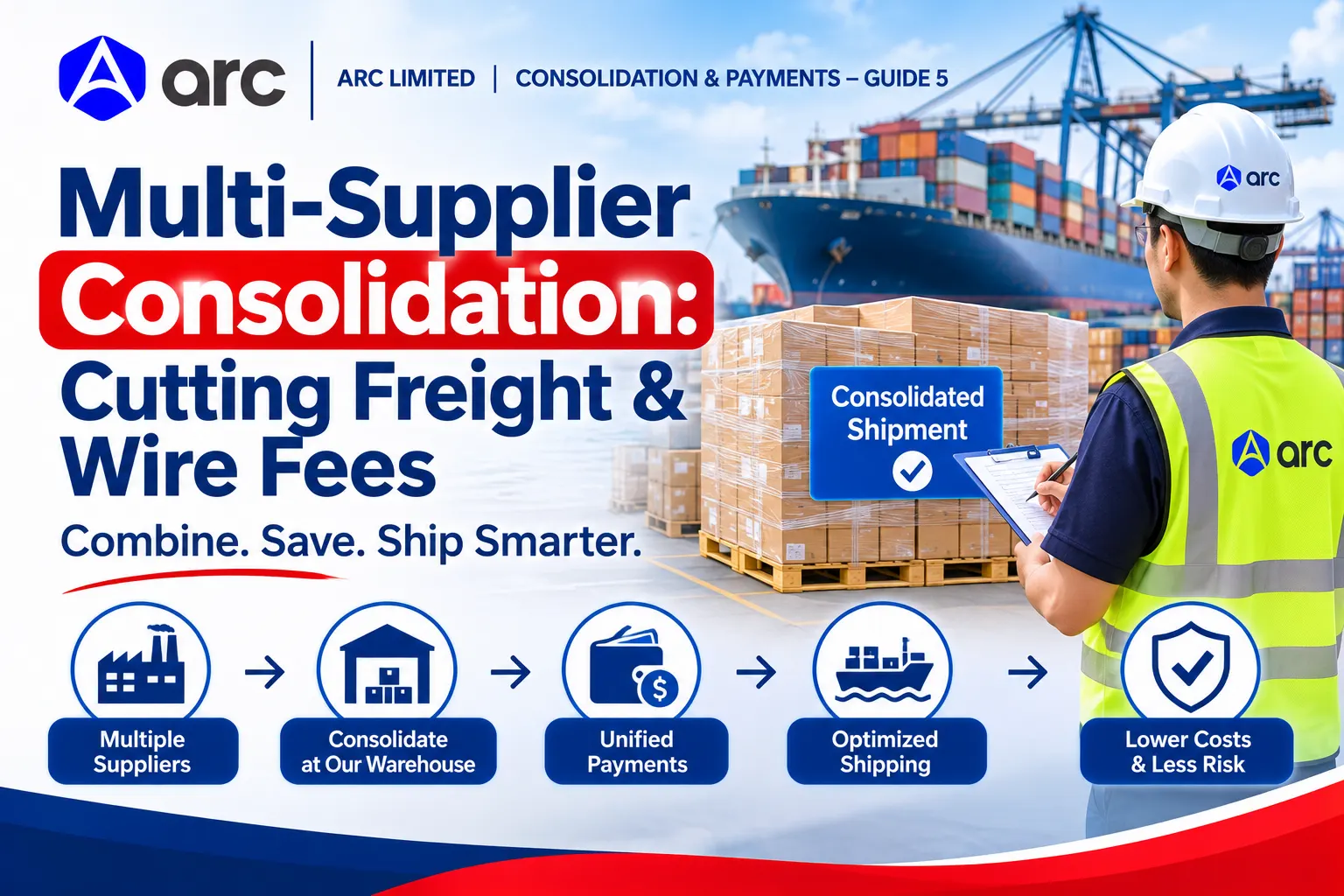
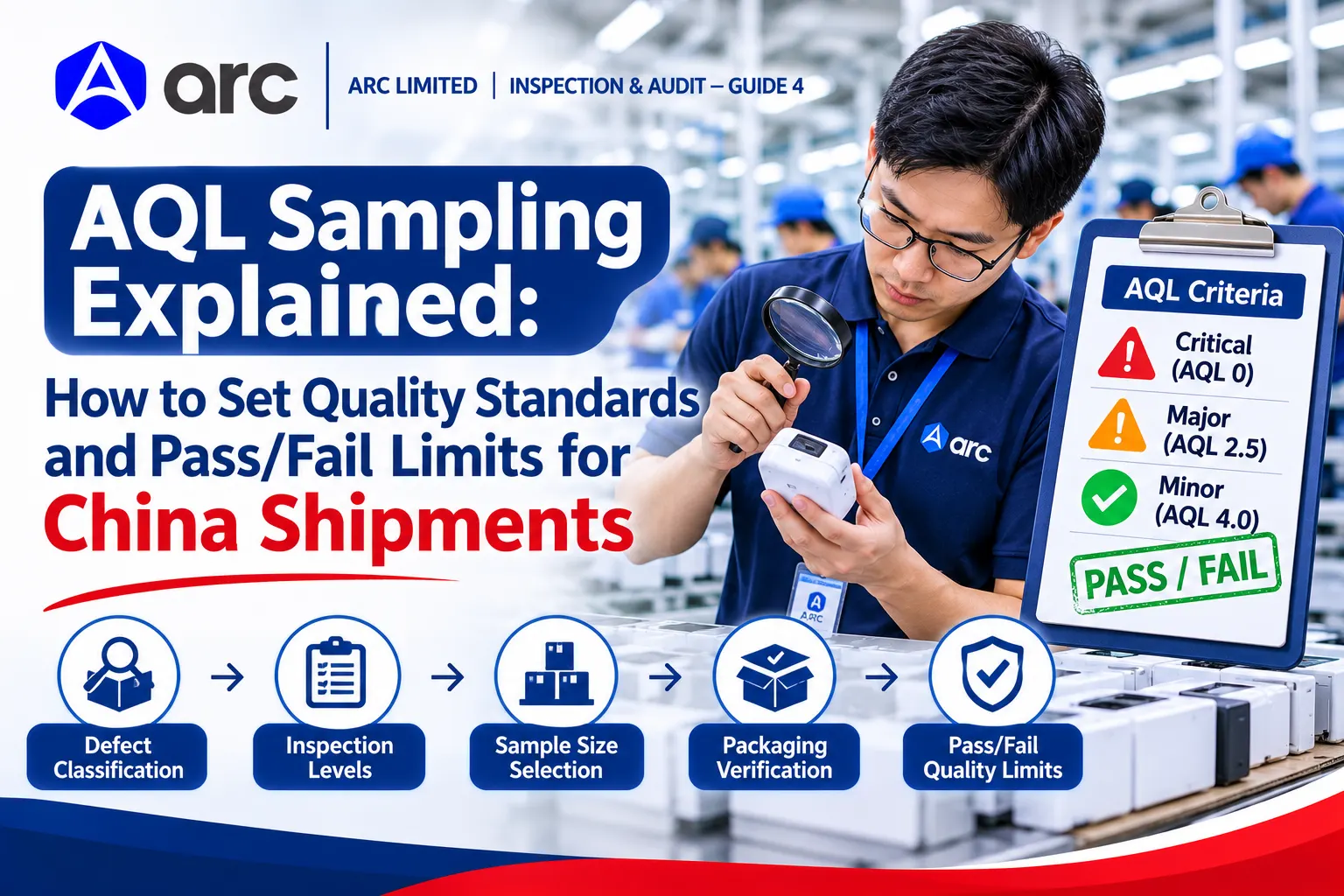
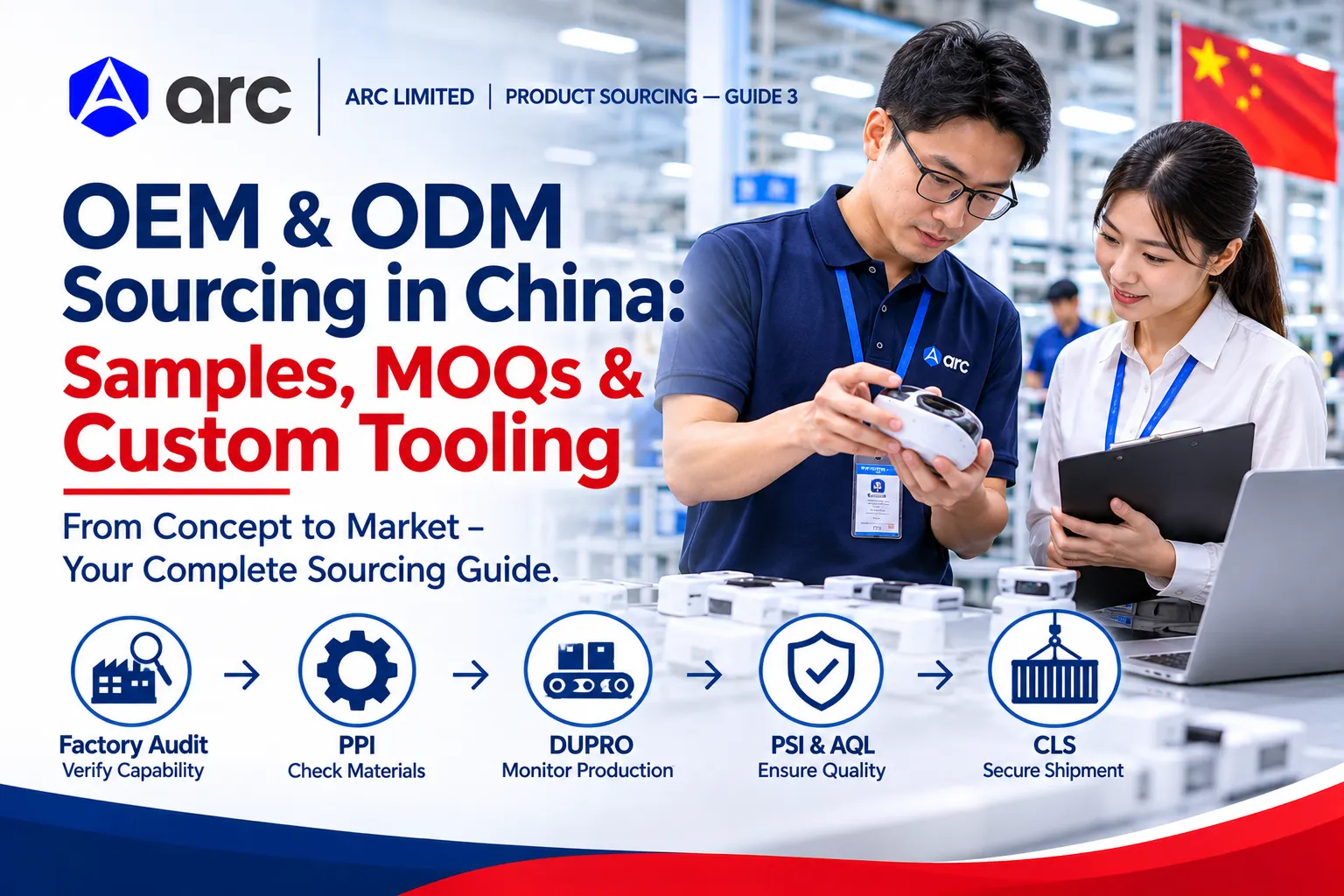
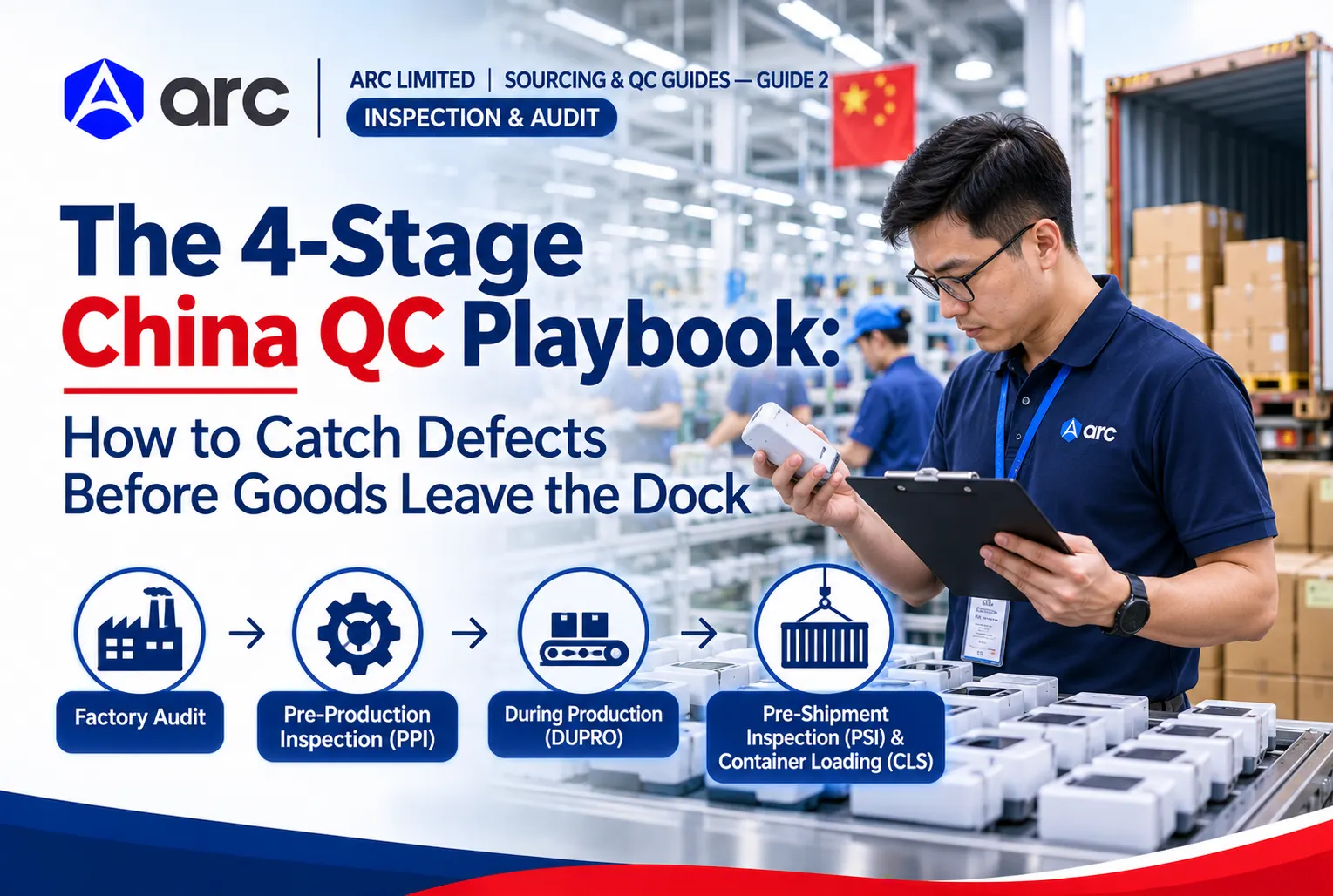
After you have vetted factories, locked quality, managed production, and consolidated goods (Guides 1–5), one final risk remains: paperwork and shipping.
You can pass AQL with flying colors and still lose weeks — and thousands in demurrage — if a single HS code, weight, or consignee detail is wrong. Smooth delivery requires airtight export documentation and the right Incoterm.
China Export Documentation & DDP Shipping: Essential Paperwork, Incoterms Comparison, Customs Clearance, Freight Options & Common Shipping Mistakes
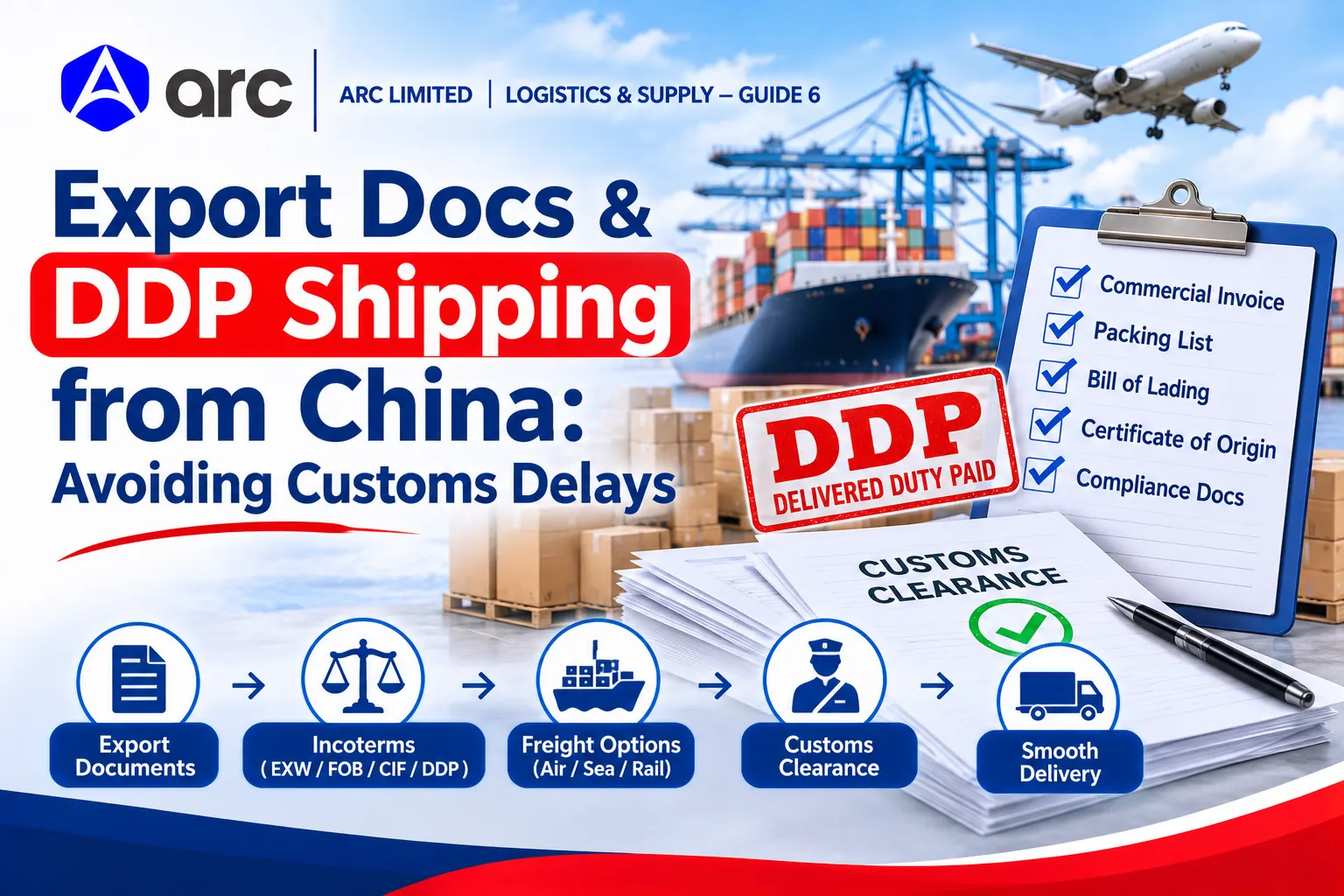
1. The Core China Export Documentation Checklist
Every shipment must clear both Chinese export customs and destination import customs. Even small mismatches between documents can trigger holds.
| Document | What It Proves | Critical Details to Verify |
| Commercial Invoice (CI) | Declared value for duty and tax calculation | Exact HS codes, unit prices, total value, Incoterm, currency, legal shipper/consignee names |
| Packing List (PL) | Physical breakdown for warehouse and customs | Carton count, units per carton, net/gross weight, CBM — must match CI line-for-line |
| Bill of Lading (B/L) or AWB | Contract of carriage and title document | Consignee, Notify Party, container/seal numbers, Original vs Telex Release |
| Certificate of Origin | Proves goods were made in China (for preferential tariffs) | Must match HS codes and invoice exactly; apply before departure |
| Compliance Docs (Category-Specific) | Meets destination safety rules | MSDS & UN38.3 (batteries/chemicals), BIS/CE/RoHS, fumigation certificates (wood) |
2. Choosing the Right Incoterm: EXW vs. FOB vs. CIF vs. DDP
Your Incoterm defines where the factory’s responsibility ends and yours begins — and who pays for freight, insurance, and duties.
| Incoterm | Who Handles China Export? | Who Handles Main Freight? | Who Handles Import Duties? | Best For |
| EXW (Ex Works) | Buyer | Buyer | Buyer | Consolidating multiple domestic suppliers |
| FOB (Free on Board) | Seller (Factory) | Buyer | Buyer | Experienced importers with their own forwarder |
| CIF (Cost, Insurance & Freight) | Seller | Seller (to port) | Buyer | Rarely recommended for LCL (high destination fees) |
| DDP (Delivered Duty Paid) | ARC / Logistics Partner | ARC / Logistics Partner | ARC / Logistics Partner | Importers who want predictable door-to-door cost |
3. How End-to-End DDP Shipping Eliminates Port Headaches
With traditional FOB or CIF, your shipment stops at the destination port. You must then handle customs, duties, and last-mile delivery while storage fees accumulate.
With ARC’s Delivered Duty Paid (DDP) shipping, you get one transparent all-inclusive rate from the factory floor to your warehouse door:
- Zero unexpected destination fees (freight, clearance, duties, taxes, and delivery bundled).
- Single point of accountability — no finger-pointing between parties.
- Especially valuable for multi-SKU consolidated shipments and e-commerce.
Important Note for Indian Importers: If your company needs a formal Bill of Entry in your own IEC name to claim IGST input tax credit, use standard FOB/CIF with ARC managing documentation. Choose DDP when you want fast, hassle-free door delivery with zero customs paperwork on your end.
4. Selecting the Right Freight Mode: Sea vs. Air vs. Rail
| Freight Mode | Typical Transit Time | Best Shipment Size | Ideal Use Case |
| Air Express / Courier | 3 – 6 days | Under 100 kg | Samples, urgent spares, high-value compact goods |
| Air Freight | 6 – 10 days | 100 kg – 1,000 kg | Seasonal launches, lightweight high-margin goods |
| Sea Freight — LCL | 18 – 35 days | 2 CBM – 14 CBM | Medium orders and multi-supplier consolidations |
| Sea Freight — FCL | 16 – 32 days | 15 CBM – 68 CBM | Lowest cost per unit for bulk orders |
| Rail Freight (China–Europe) | 16 – 22 days | 2 CBM+ or Full Container | Balanced cost and speed for European destinations |
5. Common Customs Mistakes That Trigger Port Delays
Most customs holds are avoidable. ARC audits shipments against these common traps before cargo leaves China:
- Wrong or Vague HS Codes: Generic descriptions like “electronic parts” invite queries. Verify exact destination HS codes.
- Missing Country-of-Origin Markings: “Made in China” is often required on both product and master carton.
- Weight & Carton Discrepancies: Mismatches between packing list and actual weight trigger inspections.
- Undeclared Batteries, Magnets, or Liquids: These require MSDS and UN38.3. Hiding them leads to confiscation and fines.
- Untreated Wood Packaging: Solid wood without ISPM-15 stamp can be rejected or fumigated at destination.
- Late Telex Release: Delayed release due to late payment causes containers to sit at port accruing demurrage.
6. How ARC Coordinates Your Shipment End-to-End
Whether goods are sourced through ARC or your existing factories, our logistics team manages the full chain:
- Shipment Planning: Map movement and lock vessel space before production finishes.
- Freight Coordination: Competitive sea, air, and rail rates — including port-to-port and DDP options.
- Export Documentation: Prepare and cross-audit invoices, packing lists, and bills of lading.
- Real-Time Tracking: Proactive updates from factory dispatch to final delivery.
End-to-End DDP Shipping. We Handle the Customs and the Duties.
Move your cargo straight from China to your warehouse with zero unexpected fees. Share your HS code, weight/CBM, and destination — our Hong Kong and Shenzhen team will prepare a competitive freight or DDP quote.