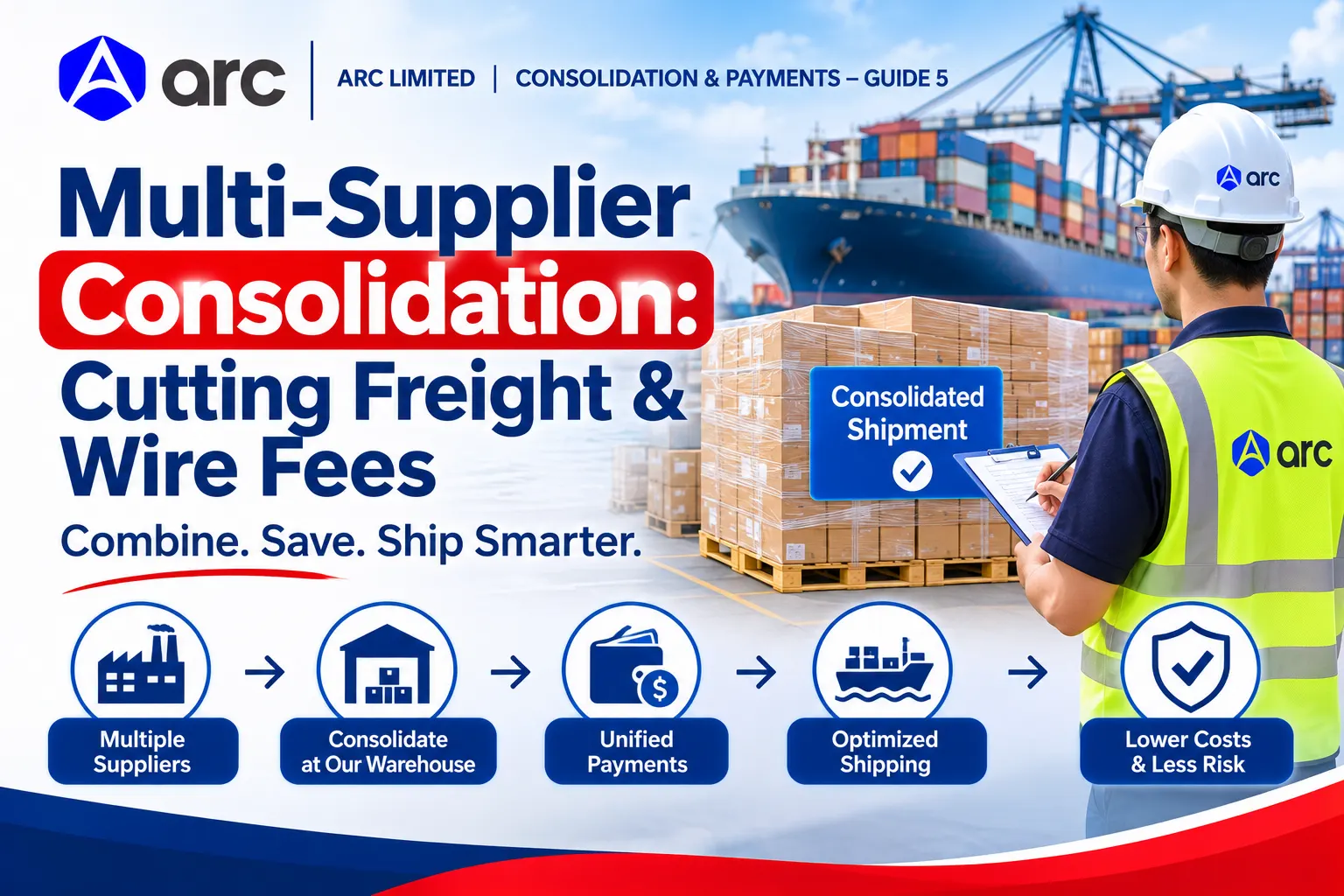
Multi-Supplier Consolidation: Cutting Freight & Wire Fees
Published on November 26, 2026
After you have vetted factories, locked quality standards, and planned production (Guides 1–4), the next cost center appears when you buy from multiple suppliers.
Most importers source from several factories — electronics in Shenzhen, packaging in Dongguan, accessories in Guangzhou, hardware in Yiwu. Shipping and paying each one separately quietly drains margins through duplicate freight minimums, customs fees, volumetric waste, and repeated wire charges.
Consolidation solves both problems at once: combining physical goods into one optimized shipment and merging all vendor payments into a single invoice.
Multi-Supplier Consolidation in China: Shipping Costs, Warehouse Workflows, Unified Supplier Payments, Freight Options & Pre-Shipment Coordination
1. The Hidden Costs of Shipping & Paying Suppliers Separately
When you treat four suppliers as four separate exports, you pay fixed overhead four times. Even fair product prices get eroded by fragmented logistics and banking fees.
| Cost / Operational Factor | 4 Separate Shipments | 1 ARC Consolidated Shipment |
| International Bank Wire Fees | 4 separate wires (deposit + balance = up to 8 fees & FX spreads) | 1 single consolidated invoice & wire transfer to ARC |
| Freight Minimums (LCL / Air) | Charged 4× minimum CBM / minimum air weight tiers | Combined volume unlocks lower per-CBM / per-kg rates (or full FCL) |
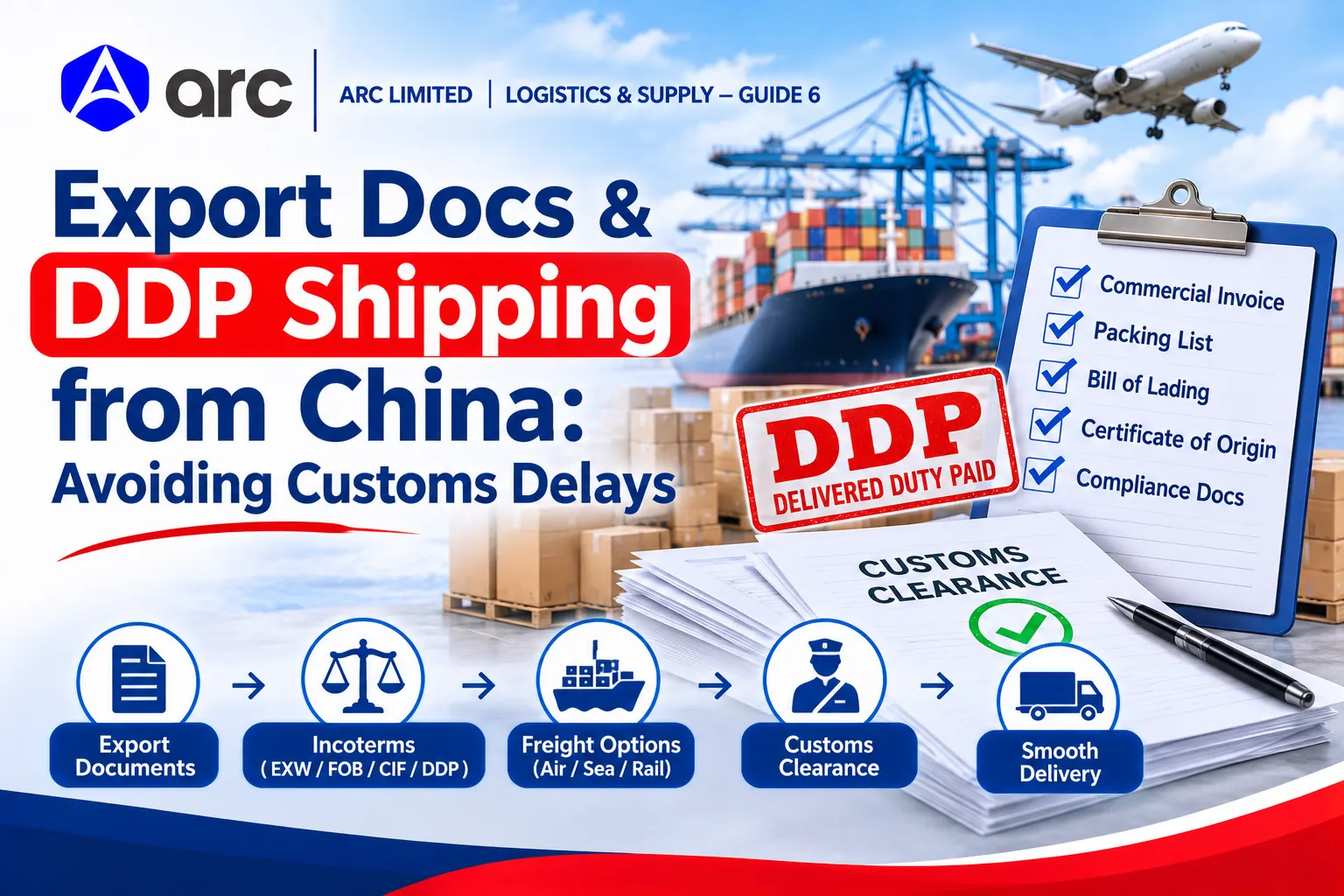
| Destination Customs Clearance | 4 separate Bills of Lading, 4 customs entries & 4 broker fees | 1 Master Bill of Lading, 1 customs entry & 1 broker fee |
| Volumetric Weight Waste | Half-empty cartons & mismatched box sizes inflate freight | Repacked into shared cartons or optimized pallets |
| Short-Shipment & Damage Risk | No central check before export; problems found at destination | Every carton counted & checked at ARC warehouse before dispatch |
2. How Physical Cargo Consolidation Works (6-Step Warehouse Workflow)
True consolidation is more than piling boxes in a corner. At ARC’s China warehouse, every incoming delivery goes through six checkpoints:
- Short-Term Storage: Hold early arrivals safely while waiting for remaining suppliers.
- Quantity Verification: Cross-check every carton against the supplier’s packing list.
- Packaging Review: Inspect for damage, crushed corners, moisture, and structural readiness.
- Repacking Services: Repack small or irregular boxes into stronger shared cartons or optimized pallets.
- Labeling & Carton Marking: Apply consistent SKU labels, barcodes, and outer shipping marks.
- Unified Export Dispatch: Ship under one packing list, commercial invoice, and Bill of Lading.
3. Unified Supplier Payments: 1 Invoice, Local USD or RMB Payouts
Many specialized factories only accept domestic RMB and do not hold export licenses. Others charge extra to route payments through third-party agents.
How ARC’s Unified Payment Consolidation Works:
- Single Invoice for Your Accounting: One consolidated invoice instead of reconciling multiple supplier invoices and FX rates.
- Local Disbursements in USD or RMB: We pay each factory in their preferred currency — unlocking true domestic pricing.
- Payment Tied to Warehouse Verification: Goods are received and checked before final supplier balances are released.
- Zero Banking Friction: Eliminates repeated wire fees, intermediary deductions, and mismatched beneficiary issues.
Pro Tip: Many Tier-2 suppliers quote 8%–15% lower in local RMB because they avoid export-agent markups. Combining local RMB settlement with ARC’s export consolidation lets you capture domestic pricing with fully compliant documentation.
4. When Does Consolidation Save the Most Money?
| Combined Shipment Size | Recommended Mode | Key Savings Trigger |
| 100 kg – 500 kg (3–5 suppliers) | Consolidated Air Freight / Express | Crosses 100 kg+ and 300 kg+ rate breaks; eliminates multiple airway bills |
| 2 CBM – 12 CBM (3–8 suppliers) | Consolidated Sea LCL | Eliminates multiple 1 CBM minimums and duplicate destination fees |
| 15 CBM – 28 CBM | Upgrade to 20ft FCL | Once volume exceeds ~14–15 CBM, a dedicated container is usually cheaper and safer |
| 50 CBM – 68 CBM | 40ft / 40ft HQ Container | Maximum per-unit freight efficiency with direct sealing |
5. Pre-Consolidation Checklist: 5 Ways to Avoid Warehouse Delays
A little coordination upfront prevents one late factory from delaying the entire shipment:
- Align Production Lead Times: Order from the slowest factory first so all deliveries arrive within the same 5–7 day window.
- Enforce Standard Shipping Marks: Give every factory a clear template (PO number, SKU, carton count) before they ship to the warehouse.
- Separate Urgent vs. Standard SKUs: If one supplier is delayed, ship urgent items separately instead of holding everything.
- Confirm HS Codes & Compliance Early: Ensure all products can clear customs together (flag batteries, liquids, or regulated items in advance).
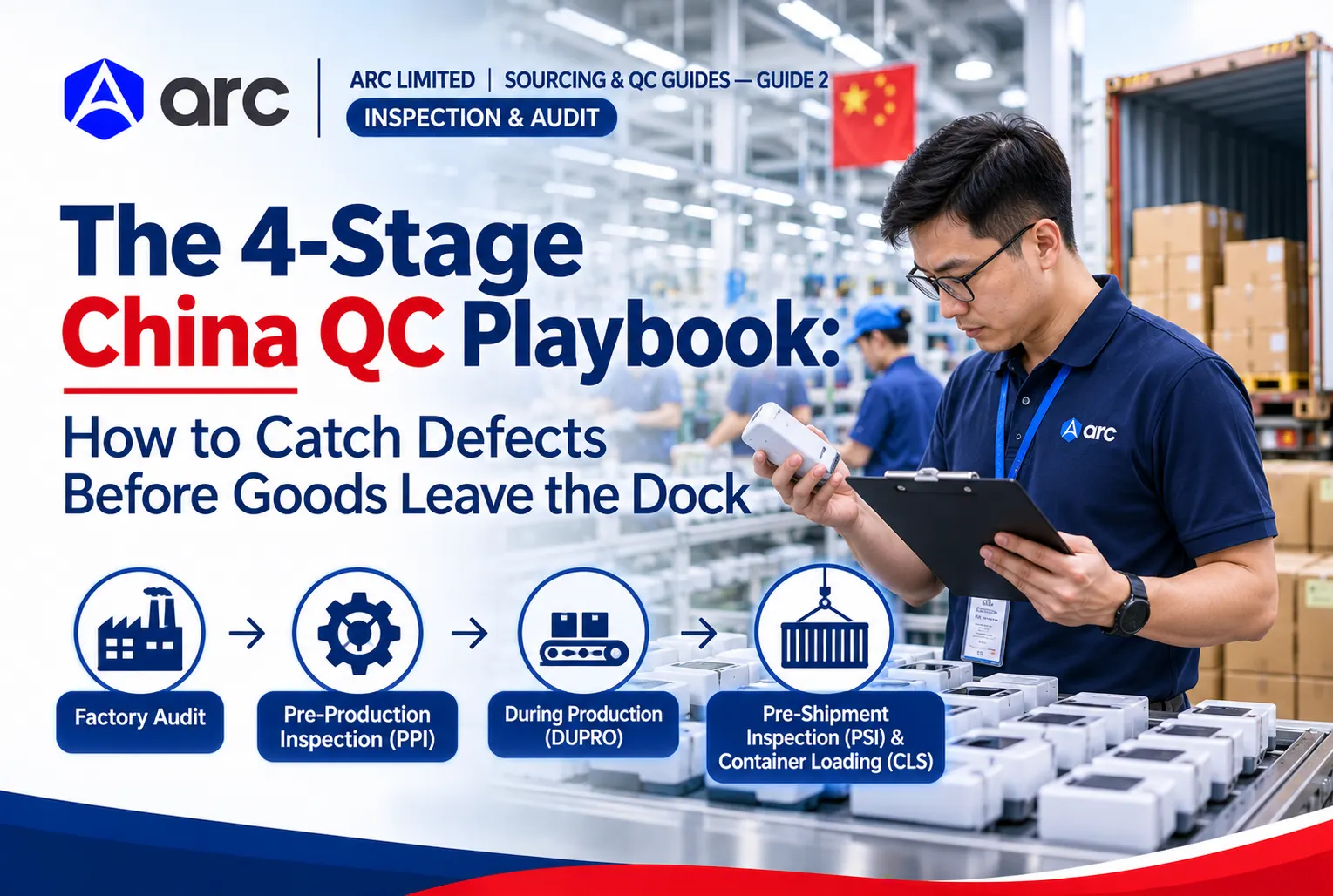
- Pair with Pre-Shipment QC: Verify quantities and run spot checks as goods arrive at the consolidation hub.
Common Mistake: Waiting until the last minute to coordinate shipping marks and production timing. This is the most frequent cause of consolidation delays.
Bring Multiple China Suppliers Together in One Shipment
ARC Limited combines your physical cargo at our China warehouse, verifies every carton, optimizes packaging, and handles individual USD or RMB vendor payouts under one single invoice — cutting both freight and wire fees while reducing risk.